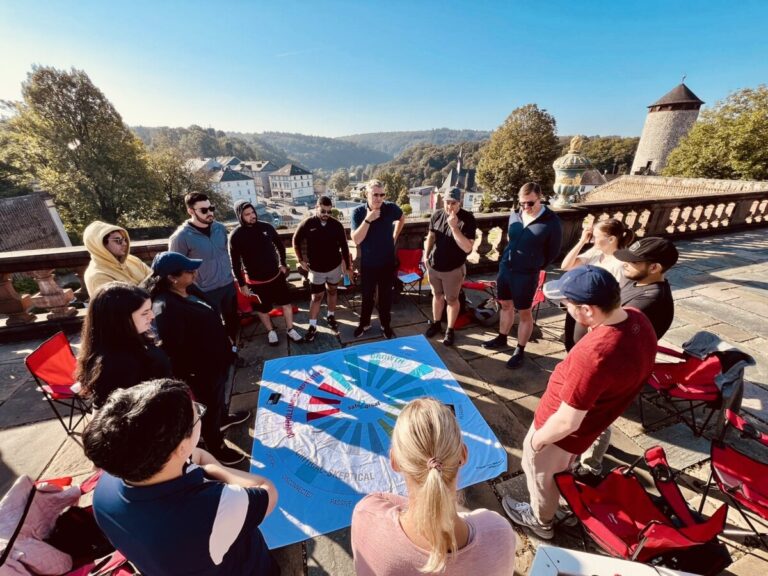
Don't miss out on a 15% off on the latest 'Safe to Great' book!
Sore Feet and Folding Shirts: What Retail Really Teaches You About Growth Mindset
You can get the lighting perfect. The playlist curated. The cashmere folded just so. You can train product knowledge, clienteling techniques, the seamless art of the upsell.
And still leave customers feeling like they’ve been processed rather than seen.
A luxury store without empathy is just an expensive room.
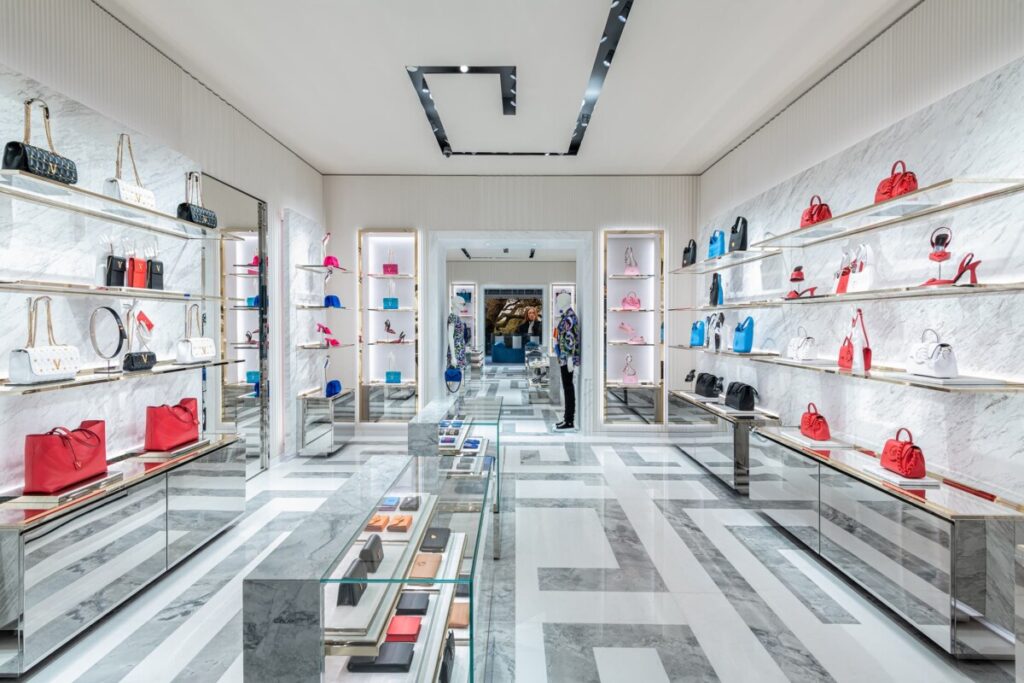
Even the Most Beautiful Store is Empty Without Empathy
Nobody writes poetry about the back of a shop.
Eight hours on concrete floors. The same playlist cycling until it feels like psychological warfare. Customers who look through you. Managers who want more but can’t articulate what. The slow death of afternoon hours when the only thing moving is the clock.
Retail is honest work. But let’s not romanticize it. Your feet hurt. Your back hurts. Sometimes your soul hurts.
And yet — this is exactly where mindset gets real.
I’ve spent thirty years studying leadership in boardrooms and executive suites. But some of the clearest examples of Growth Mindset I’ve seen come from people earning hourly wages in stores where nobody is watching, nobody is coaching, and nobody is particularly invested in whether they grow or not.
That’s what makes it real.
Between the customer rush at midday and the next wave of foot traffic, there’s you, the merchandise, and a choice about who you’re going to be.
The easy thing — the protective thing — is to drift. Go through the motions. Half-listen. Clock-watch. Survival mode, I call it. You’re present in body but checked out in every way that counts. It’s not laziness — it’s a rational response to feeling invisible.
Conforming is another path. Follow the scripts. Don’t make waves. It offers a kind of safety: competence without exposure, reliability without risk. But over time, it hollows you out. You become a function, not a person.
And here’s what gets lost when you’re hollowed out: the capacity to actually see the customer in front of you.
Empathy isn’t a soft skill. It’s the hard skill that makes everything else land.
Not scripted warmth. Not the trained smile. Real empathy — the capacity to sense what this particular customer needs in this particular moment. Are they browsing or buying? Celebrating or comforting themselves? Do they want guidance or space? Conversation or efficiency?
You can’t fake that. And you can’t deliver it if you’re drifting, depleted, running on fumes just to get through the shift.
Empathy requires presence. It requires enough internal resource to actually notice another human being. A Style Consultant who’s depleted might hit every checklist item and still leave the customer feeling like a transaction. One who’s genuinely present — who has the emotional capacity to actually see the person in front of them — creates something entirely different.
The technique is identical. The impact is worlds apart.
That’s why mindset matters so much in retail. Not as some abstract corporate initiative, but as the foundation that makes genuine human connection possible.
What does it take to sustain empathy across an eight-hour shift?
This is where the real work lives — and it’s work most organisations ignore.
Discipline — not heroics, but the quiet refusal to let yourself drift when drifting would be easy.
Presence — not charisma, but actually being here, in this interaction, with this customer, right now.
Recovery — not never being knocked down, but how quickly you get back up after a customer treats you like furniture.
These are the raw materials of what I call Growth Mindset. And you can develop them selling handbags as easily as running a multinational. Maybe more easily, because there’s no one applauding. The only reward is who you become — and the connection you’re able to create.
The psychology research backs this up. When people have internal resources — when they’re not running on empty — they stop worrying about themselves and can actually focus on the customer. Empathy becomes possible. Without those resources, even the best training falls flat.
For leaders with retail teams:
Stop measuring only what’s easy to measure. Conversion rates and basket sizes matter. But so does the human capacity to sustain empathy across a nine-hour shift with two fifteen-minute breaks.
If your people are depleted, your customers feel it. Every time.
The question isn’t whether your retail workforce is capable of genuine connection. It’s whether you’ve created conditions where connection is possible. Are you farming your people — investing in their growth — or just mining them until they’re empty?
For people working the floor:
The environment may not see you. But you can see you.
The discipline you build in those quiet, unsupervised moments? That’s yours. Nobody gave it to you. Nobody can take it away. And it’s the foundation that lets you show up — really show up — for the next person who walks through the door.
Sore feet heal. The person you become while those feet are sore — that stays.
The best brands understand that experience is the product. But experience doesn’t come from lighting or layouts or luxury finishes. It comes from human beings with enough presence, enough discipline, enough left in the tank to actually see another person.
Even the most beautiful store is empty without that.